
Enter Office
22 August 2026
Choosing the right materials from the start optimises cost while keeping the office aesthetically sound and durable over the long run.
In office interior material projects, choosing the right material does not just affect aesthetics — it also determines durability, usage experience and a business's investment cost.
Many businesses focus on the overall concept while overlooking material quality, which leads to furniture that wears out quickly or repair costs that show up after only a short time in use.
Choosing the right materials from the start helps optimise cost while still keeping the office aesthetically strong and effective to operate long-term. Below are the office interior materials most commonly used today.
1. MDF engineered wood — the most common material today
MDF is one of the most widely used office interior materials today thanks to its reasonable cost and high versatility. This material commonly appears in items such as desks, filing cabinets, partitions or the reception counter.
Thanks to its wide range of colours and finishes, ease of construction, and how well it pairs with many design styles, MDF suits most modern office models.
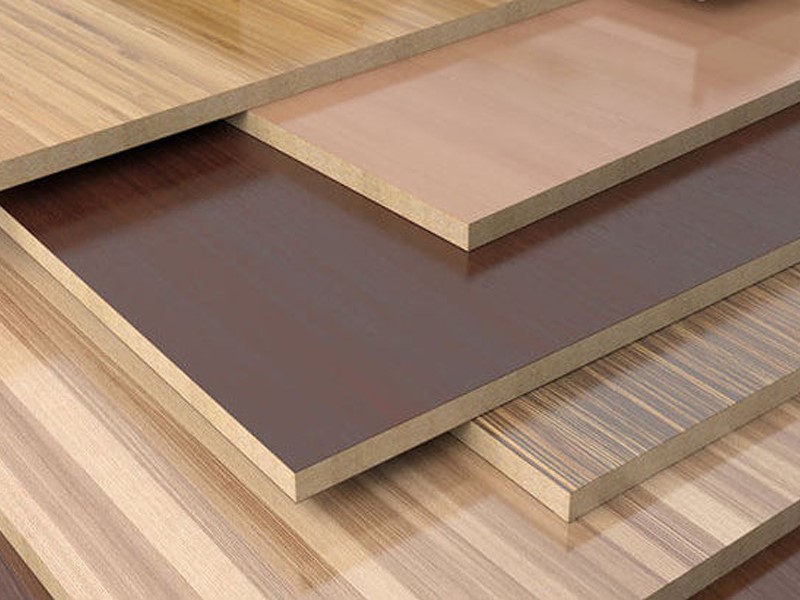
Advantages: reasonable cost, easy to construct and shape, a wide range of colours and finishes, suits many design styles.
Limitations: less durable than solid wood, water resistance depends on the core type used.
Moisture-resistant green-core MDF is now generally preferred to increase durability and limit warping over time.
2. Veneer — a way to boost aesthetics
Veneer is widely used in spaces that call for a touch of luxury, such as a director's office, a premium meeting room, or reception. It is a thin layer of natural wood applied over engineered wood to give a premium feel while still costing less than solid wood.
Veneer is often paired with glass or metal to create a more modern, professional space.
Advantages: keeps the beauty of natural wood, costs less than solid wood, adds a sense of luxury to the space.
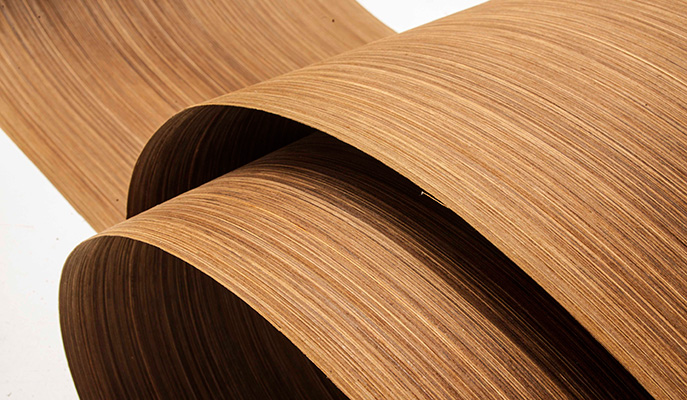
Limitations: requires a high level of finishing precision, can scratch easily if not handled correctly.
3. Glass — opens up a space
In modern office interior material projects, glass is almost indispensable. It is commonly used for meeting-room partitions, glass doors, desktops or the reception area to create a sense of spaciousness and make the most of natural light.
This is a very popular solution in modern offices that follow the open-space trend.
Advantages: creates an airy feel, makes the most of natural light, gives a modern look.
Limitations: easily shows fingerprints, sound insulation depends on glass thickness.
Tempered glass combined with frosted film or automatic blinds is now widely used to add privacy while keeping visual connection across the space.
4. Metal — a trend in modern offices
Metal materials such as powder-coated steel, stainless steel or aluminium are increasingly used in modern office interior design, commonly appearing at desk legs, cabinet frames, partition systems or decorative details to give the space a bolder, more modern feel.
Advantages: high durability, suits modern or industrial styles, pairs well with wood and glass.
Limitations: construction requires high precision, can feel cold if overused.
5. Stone — adds a premium touch
Natural or engineered stone is commonly used at reception, large meeting tables or client-facing areas to add a sense of luxury and professionalism to the office. This material suits businesses that want to elevate their brand image or create a focal point in their client-welcome area.
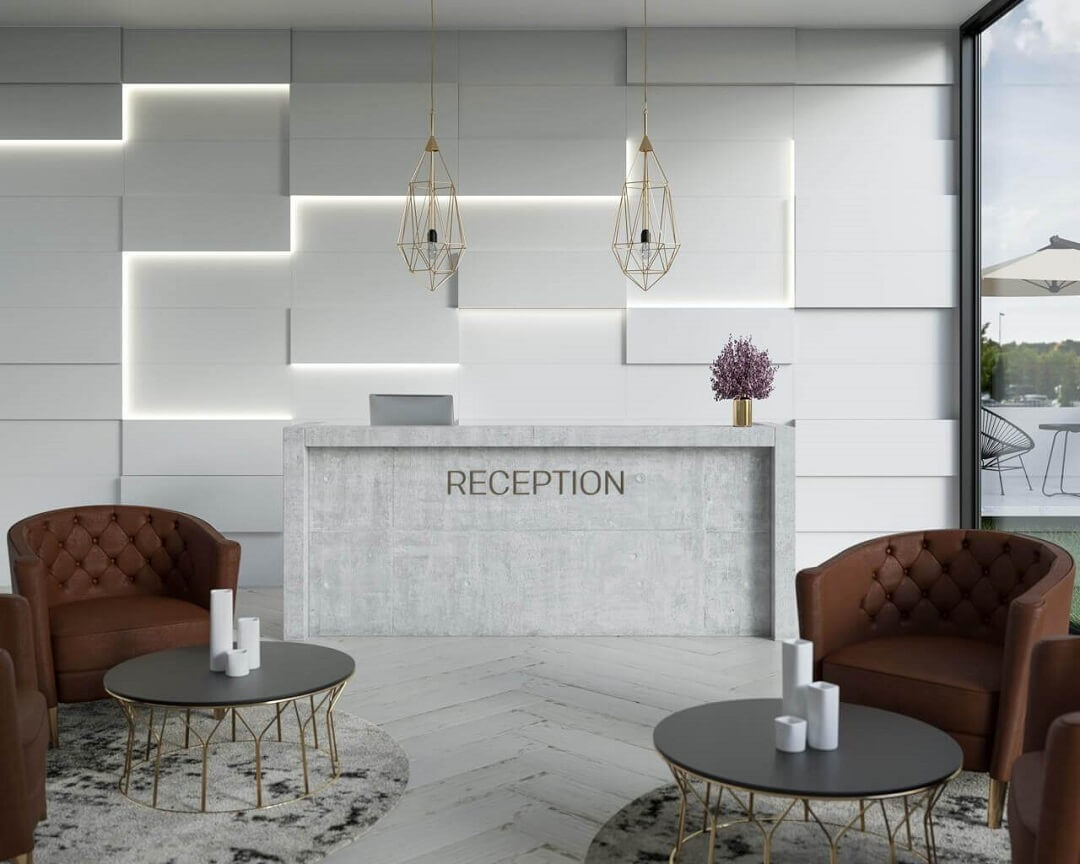
Advantages: luxurious and premium, highly durable, easy to clean and maintain.
Limitations: higher investment cost than most other materials, more complex to install due to its heavy weight.
In many premium projects, stone is often paired with lighting or metal to boost the visual effect.
6. Carpet and acoustic materials
In modern offices, acoustics are increasingly important for improving the working experience and staff focus. Materials such as carpet flooring, acoustic panels, acoustic ceilings or acoustic partitions are now widely used to reduce noise and create a more professional working environment.
Advantages: effectively reduces noise, improves the working experience, gives a more professional feel.
Limitations: needs periodic cleaning, some acoustic materials can be fairly costly.
This is a factor that is often overlooked but has a large impact on how well an office actually operates.
7. How should you choose office interior materials?
No material is "best" for every project. What matters is choosing what fits:
- Investment budget
- Design style
- Level of use
- The business's brand image
An optimal solution is usually a sensible mix of several materials to balance aesthetics, durability and investment cost. Materials should be chosen based on real usage needs rather than looks or initial price alone.
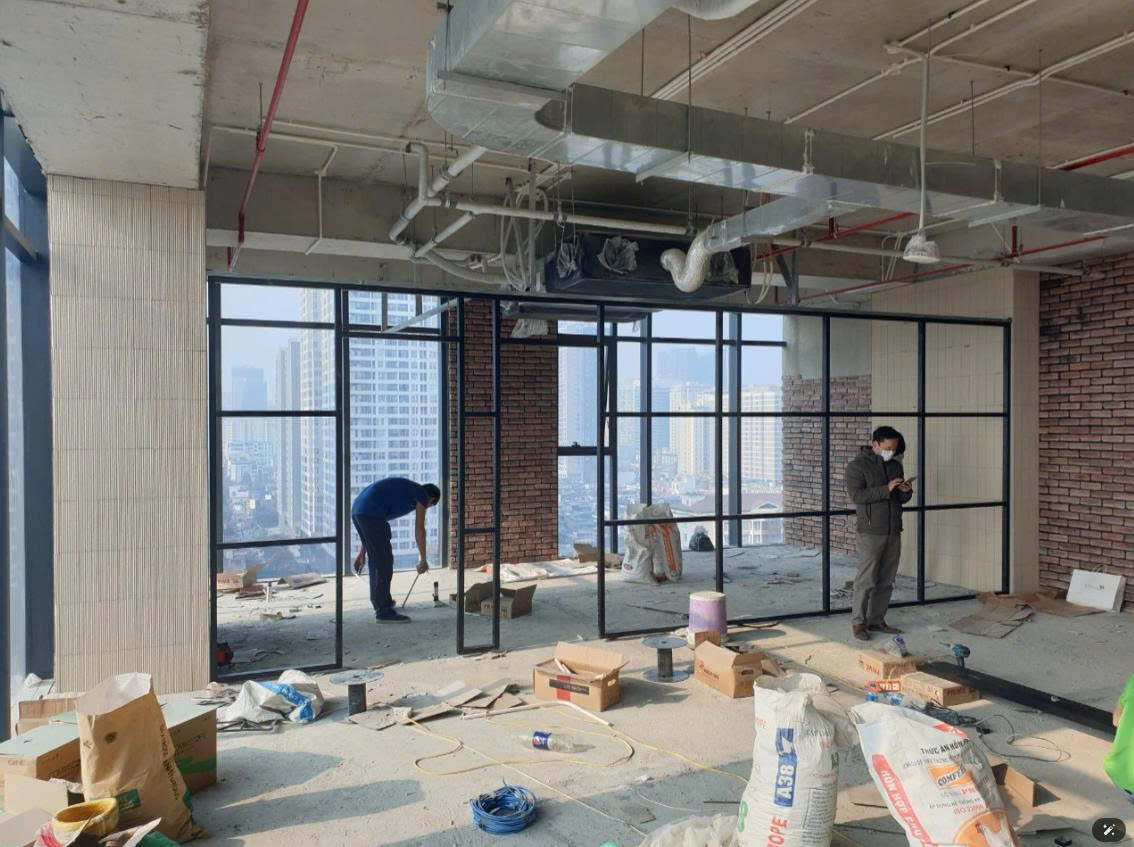
Enter Office – A professional office interior design partner
Enter Office delivers full-service office interior design solutions with a focus on optimising function, materials and investment budget for businesses.
What sets Enter Office apart:
- Advising on materials that fit real usage
- Aligning design and construction
- Optimising investment budget
- Controlling finish quality
Beyond creating a beautiful space, Enter Office aims for offices that are sustainable and effective to operate long-term.
8. Conclusion
Choosing the right office interior materials plays a very important role in building a professional, sustainable workspace.
The right choice not only boosts aesthetics but also optimises durability, usage experience and long-term operating cost for a business. If you need advice on material choices or an office interior design solution, contact Enter Office for detailed support.