
Enter Office
22 August 2026
8 key factors every business should keep in mind for an office design project that runs smoothly, on budget and on schedule.
An effective office design project does not stop at creating a beautiful space — it also needs to ensure operability, a good user experience, and the business's ability to grow long-term.
In practice, many businesses run into extra costs, delayed construction, or a finished office that does not match actual usage needs because they skip important steps during delivery.
Understanding the key points to note from the start will help a business control the whole design process better and significantly reduce the risk of things going wrong. Below are the most important things to keep in mind in the office design process.
1. Clearly define usage needs from the start
Before starting design, a business needs to clearly define headcount, working model, the needs of each department, and future growth potential. This is a key step that helps shape the layout and optimise usable area from the outset.
A good-fit office does not just need to look good — it also needs to genuinely meet the business's real usage needs.
2. Optimise function instead of focusing on aesthetics alone
Many businesses focus too much on the overall look and forget the actual user experience of staff. A beautiful office with a poorly thought-out layout, inconvenient circulation, or a lack of storage will directly hurt work performance.
Function should always be prioritised first in the office design process. An effective space needs a balance between aesthetics, operations and long-term usage experience.
3. Work out a clear budget
One major reason projects run over budget is not defining the budget clearly from the start. A business should split the budget into groups such as design, construction, furniture, operating equipment and contingency.
Clear budget planning helps control the whole delivery process better and limits unplanned extra costs.
4. Choose the right materials
Materials affect not only aesthetics but also determine the long-term durability and usage experience of the office. Common materials in office design today include moisture-resistant MDF, tempered glass, veneer, powder-coated metal, or engineered stone.
Material choice should fit the investment budget, design style and actual level of use. This is a factor that heavily influences total cost and the building's service life.
5. Optimise lighting and ventilation
Light and air quality directly affect staff experience and work performance. A modern office should make the most of natural light, place lighting sensibly, and ensure effective air circulation.
This is a factor that is often overlooked but has a very large impact on the long-term quality of the working environment.
6. Keep design and construction aligned
Many businesses hire separate design and construction contractors to save on initial cost, but this easily leads to gaps between the drawings and what actually gets built.
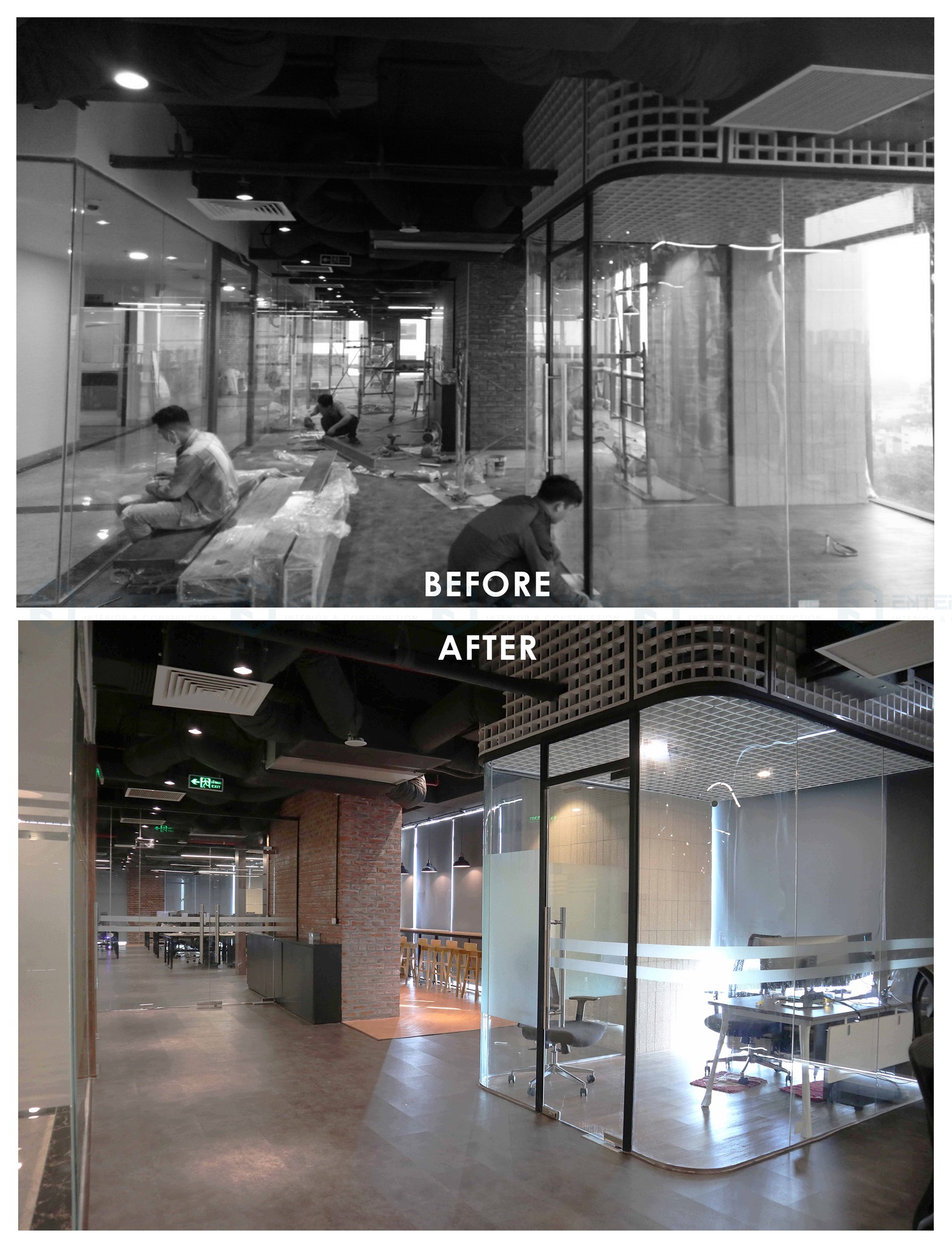
Keeping the entire process aligned from design to construction helps control quality, schedule and budget better, while significantly limiting unnecessary extra costs during delivery.
7. Monitor construction progress
During delivery, a business needs to regularly check actual progress, compare materials against the original design, and control any changes that come up.
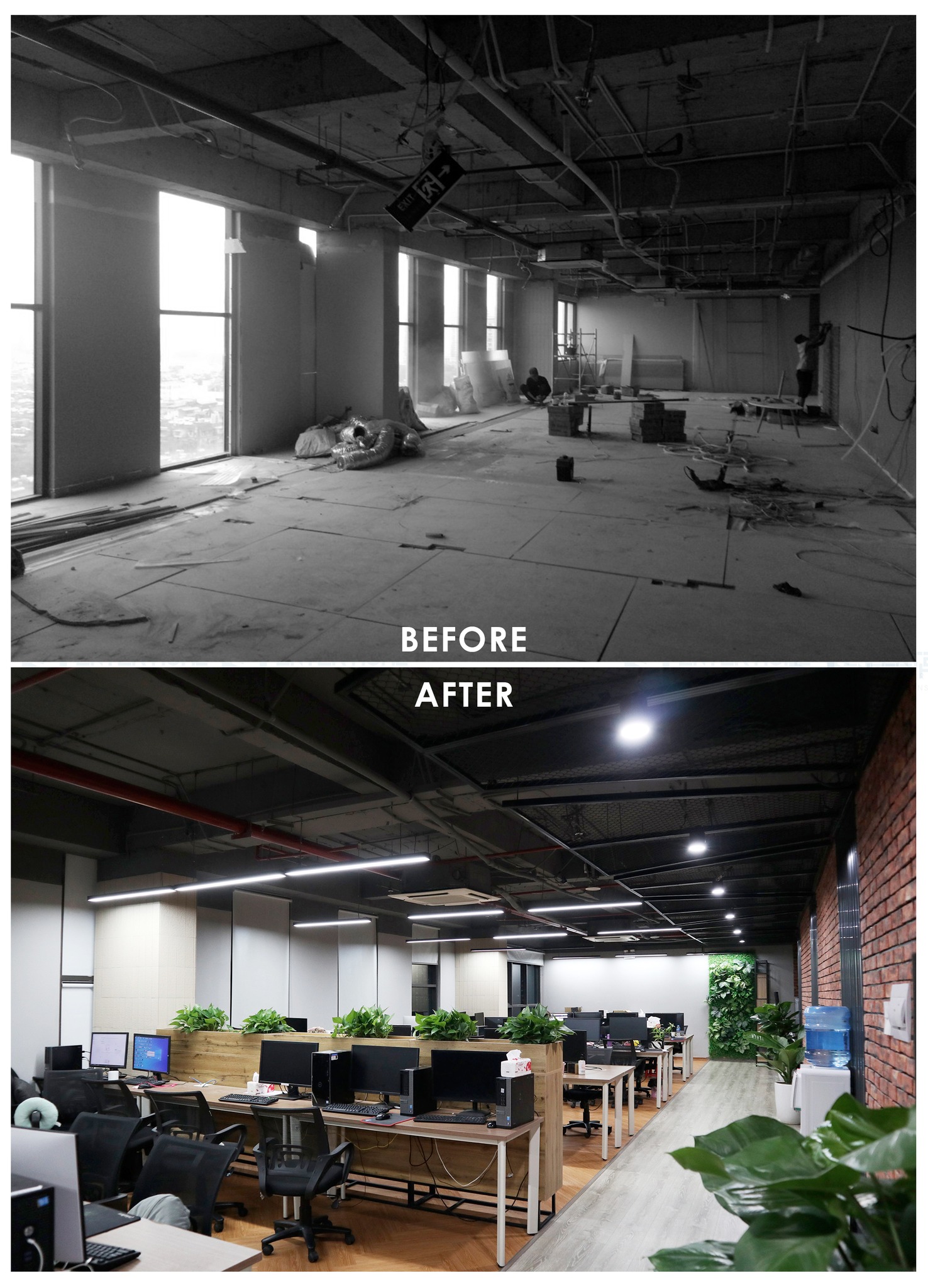
Staying close to the construction process helps limit delayed handover, reduce extra costs, and ensure the quality of the finished project.
8. Pay attention to the brand element
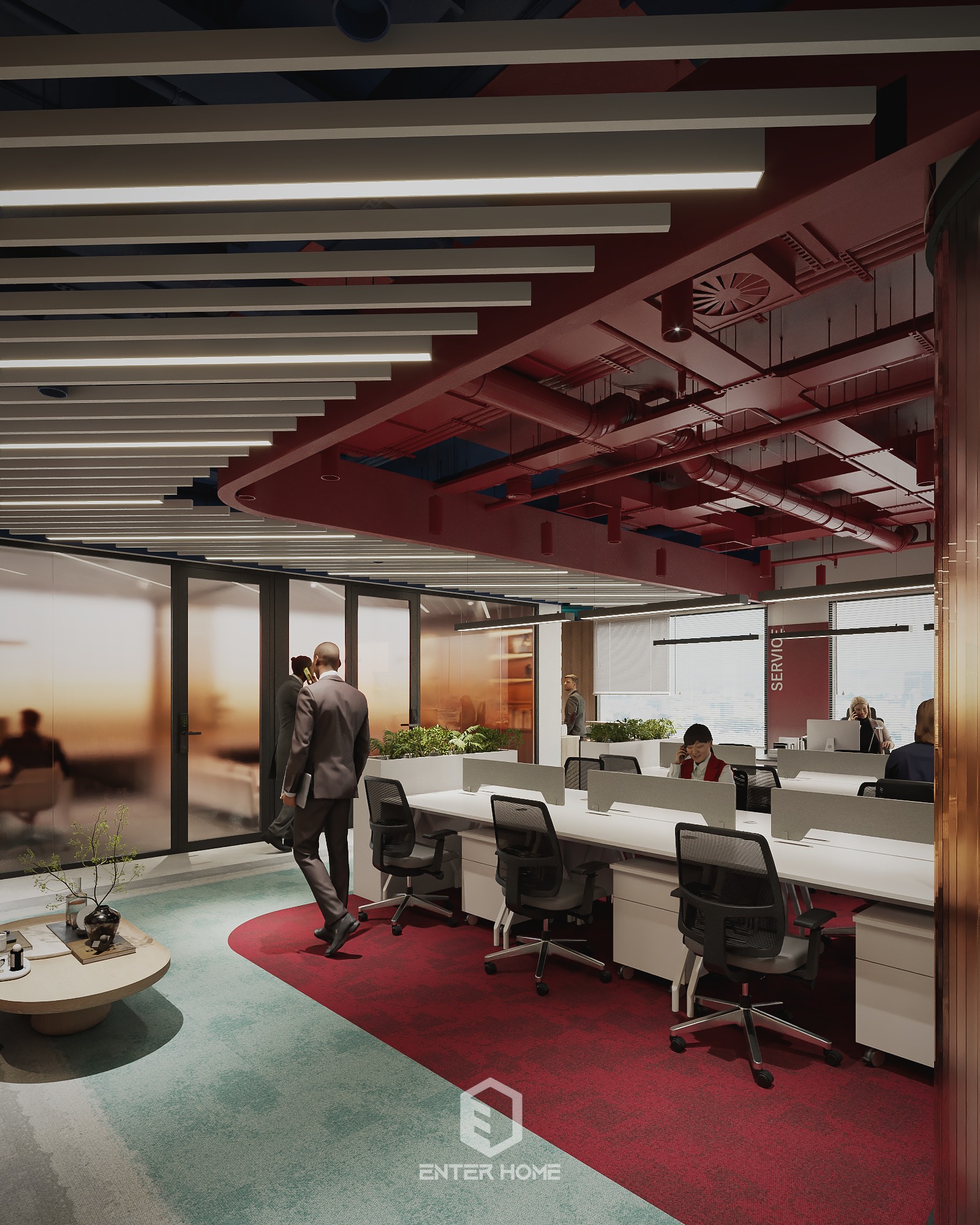
An office is not just a place to work — it is also a space that expresses a company's image and culture. A professional office design project needs to reflect brand colours, company style and a consistent spatial experience.
This also helps raise a professional image in the eyes of clients and partners.
Enter Office – A professional office design solution
Enter Office delivers full-service office design and construction, focused on optimising function, user experience and investment budget for businesses.
What sets Enter Office apart:
- Design tailored to actual operating needs
- Aligned design & construction
- Optimised space and cost
- Tight schedule & quality control
With experience delivering many real-world projects, Enter Office aims for modern, effective and sustainable workspaces for businesses.
Conclusion
An effective office design project does not depend on aesthetics alone — it also comes down to the ability to optimise function, budget and real-world usage experience.
Preparing carefully from the start will help a business limit extra costs, control schedule better and improve long-term operating efficiency. If you need advice on professional office design, contact Enter Office for a solution suited to your business.