
Enter Office
22 August 2026
Lighting directly affects focus and work performance — here are the illumination and colour-temperature standards to know when designing an office.
When it comes to office design, many businesses tend to focus on furniture, colours or layout. However, there is one factor that directly affects work performance, staff health and operating quality but is often overlooked: lighting.
According to research on working environments, poor lighting can reduce focus, cause eye strain and headaches, and hurt performance over time. Conversely, an office with well-planned lighting helps staff feel more comfortable, work more effectively, and significantly reduces vision-related health issues.
Lighting is not just a technical item — it is a factor that decides the quality of a modern office design project.
Why does lighting matter in office design?
Many businesses invest hundreds of millions of dong in furniture but set up their lighting purely by feel. This leads to an office that looks good but is not comfortable to work in.
A properly designed lighting system will help:
- Increase focus
- Reduce eye strain
- Limit mistakes at work
- Improve staff morale
- Optimise the spatial experience
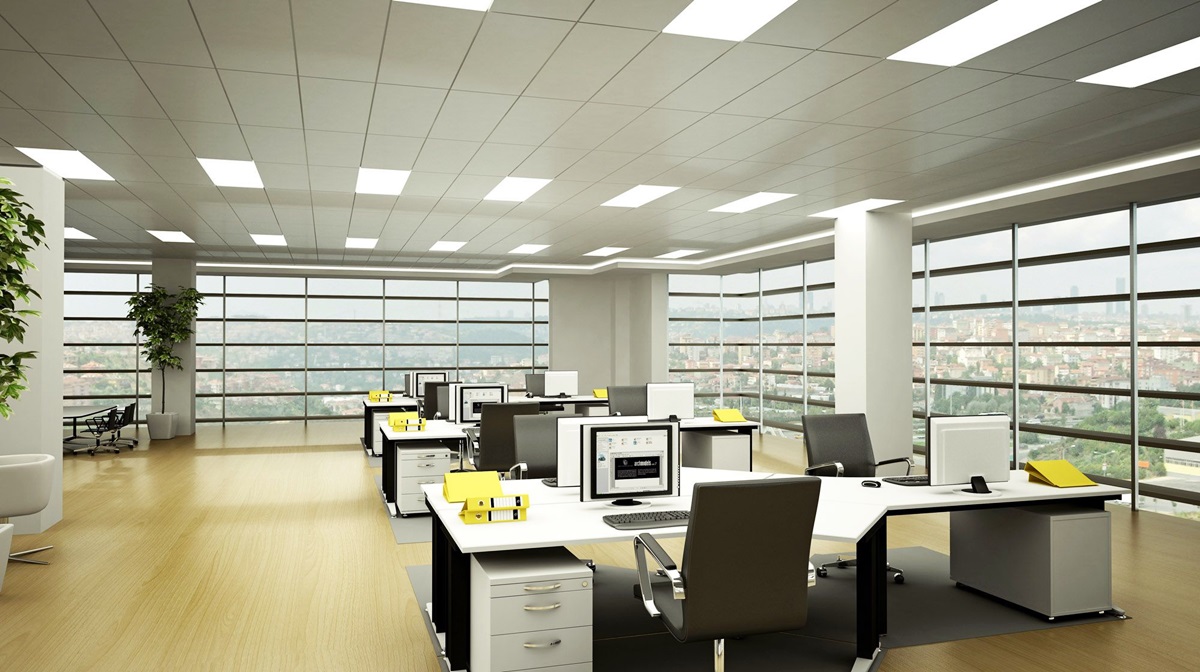
This matters especially for work that involves continuous computer use for 6–8 hours a day, where lighting directly affects how effectively staff can work.
Illumination standards in an office
In modern office design, brightness is usually measured in Lux. Each functional zone has its own lighting standard: general work areas, meeting rooms and reception at 300–500 Lux; director's offices at 300–750 Lux; document-reading areas at 500–750 Lux; corridors at 100–200 Lux; pantries at 200–300 Lux.
A common mistake is using the same brightness level throughout the whole office, leaving some areas over-lit while others are under-lit. Allocating light by function is the more optimal solution.
Prioritise natural light
Modern offices around the world share one thing in common: making the most of natural light. The benefits of natural light include:
- Lower energy consumption
- Better focus
- Improved mental wellbeing
- A more spacious, airy feel
It is best to place work areas near glass facades or areas that receive the most natural light. That said, daylighting also needs to be controlled with sun-blocking curtains, Low-E glass and thermal insulation film to avoid glare or excess heat in the office.
What colour temperature is right?
Besides brightness, colour temperature is also very important. Generally: 2700K–3500K is warm/yellow light, 4000K–4500K is neutral light, 5000K–6500K is cool/white light.
For a modern office, the ideal colour temperature usually falls between 4000K–5000K, which helps increase alertness, reduce eye strain, aid focus, and create a professional feel. Many offices today use overly strong 6500K white light, which feels cold and uncomfortable over long working hours.
The 3-layer lighting principle in office design
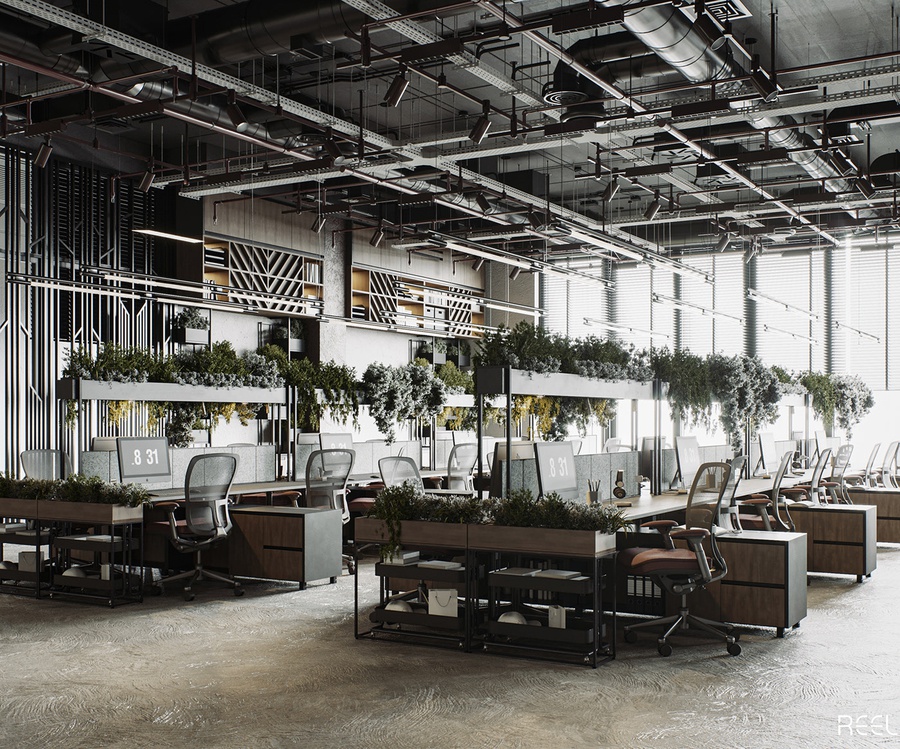
A quality office does not rely on general lighting alone. Modern office design projects typically use 3 layers of light:
Ambient lighting
This is the main light source that illuminates the whole space, typically using LED panels, linear lights or recessed downlights.
Task lighting
Placed at spots that need higher brightness, such as desks, meeting tables, and document-reading areas — meant to support specific activities without raising the brightness of the entire office.
Accent lighting
This layer boosts the aesthetics of a space, typically placed at reception, meeting rooms, lounge areas and the pantry. Combining all three layers gives an office more depth and a far more professional feel.
Common mistakes in office lighting design
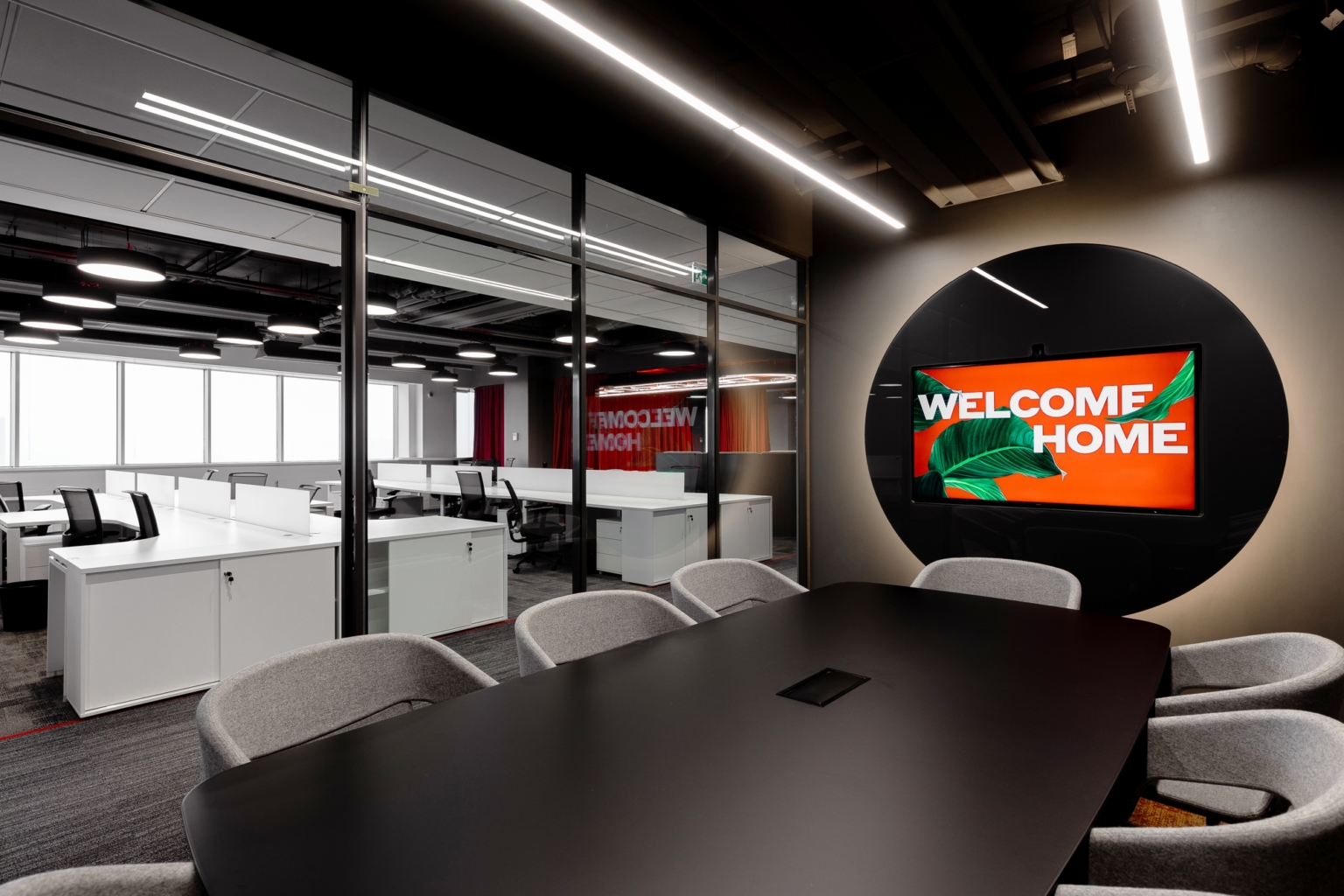
Having surveyed many offices, the most common mistakes are: uneven light distribution, glare reflecting off computer screens, overly white light causing glare, insufficient light at work areas, not making use of natural light, and using only one type of fixture for the entire office. These are the reasons staff tire quickly even when a lot has been invested in the office.
Modern office lighting design trends
Today, businesses are increasingly favouring smart lighting solutions such as: energy-saving LEDs, automatic light sensors, brightness adjusted by time of day, combining natural and artificial light, and lighting systems tailored to each functional zone. This trend not only improves the working experience but also significantly cuts long-term office operating cost.
Enter Office – A professional office design partner
Enter Office delivers office design solutions with a focus on optimising function, lighting and the working experience for businesses.
What sets Enter Office apart:
- Analysing how staff actually use the space
- Optimising lighting by functional zone
- Effectively combining natural and artificial light
- Aligned design and construction
- Tight control over finish quality
With experience delivering many real-world projects, Enter Office aims for modern, scientifically designed and sustainable workspaces.
Conclusion
In office design, lighting is not simply about illumination — it directly affects work performance, health and the staff experience.
A lighting system calculated to the right standard will help increase work productivity, reduce eye strain, improve the quality of the working environment, optimise operating cost, and raise the overall value of the office. That is also why lighting is always one of the top priorities in modern office design projects.